Choosing the right ski boots is arguably the most important gear decision you'll make. Forget the skis for a second. A bad boot fit ruins your day, your technique, and your feet. I've seen too many people, including myself years ago, buy boots based on brand hype or a vague "feel," only to end up with numb toes, bruised shins, and a hatred for the sport. It doesn't have to be that way. This guide cuts through the noise. We're not just talking about size; we're talking about matching the boot's internal shape to your foot's anatomy, aligning flex with your aggression, and setting you up for control, not suffering.
Your Quick Boot Fitting Roadmap
- Forget Your Shoe Size: The First Measurement
- The Three-Point Hold: Where Your Foot Should Feel It
- Flex Isn't Just a Number: Matching Stiffness to You
- Boots for Your Style: From Groomers to Powder
- The In-Store Try-On: A Step-by-Step Test
- Mistakes Even Experienced Skiers Make
- Your Boot Fitting Questions Answered
Forget Your Shoe Size: The First Measurement
Your street shoe size is a lie. Seriously, throw that number out the window. Boots are measured in Mondopoint, which is the length of your foot in centimeters. A size 9 US men's shoe might be a 27.0 or 27.5 mondo. The difference of half a centimeter is massive in a rigid plastic shell.
Here's what you do at home, before you even step into a shop:
- Trace Your Foot: Stand on a piece of paper, weight evenly distributed. Have someone trace the outline of your bare foot. Do this at the end of the day when your feet are slightly swollen.
- Measure the Length: Draw a line from the very back of your heel to the tip of your longest toe (not always the big toe). Measure that in centimeters. That's your starting mondo point. If you're between numbers, round down. A 26.7cm foot should start in a 26.5 boot.
- Measure the Width: Find the widest part of your forefoot (the ball) on the tracing and measure that width in millimeters. This is crucial. A narrow foot in a wide boot will swim; a wide foot in a narrow boot will be agony.
I made the mistake of ignoring width for years, thinking a tight length would compensate. It just gave me foot cramps. The width is non-negotiable.
The Three-Point Hold: Where Your Foot Should Feel It
A perfect ski boot fit isn't about comfort in the living room. It's about precise, secure contact in three specific areas when you're in a skiing stance (knees bent, weight forward). Think of it as a firm handshake for your foot.
1. Heel Pocket
Your heel must be locked down. Zero lift. When you flex forward, your heel should not rise up in the boot. This is the primary control point for steering your skis. If there's space here, you're wasting energy and losing precision. A good fitter will check this by having you lean forward while they try to pull up on your heel.
2. Instep & Forefoot
This is where width comes in. You should feel even pressure across the ball of your foot and the top of your instep. Not pinching, not squeezing, but a firm, encompassing hug. You should be able to wiggle your toes slightly, but your forefoot should not be able to roll side-to-side.
3. Shin & Calf
The cuff of the boot should wrap snugly around your lower leg. The tongue should distribute pressure evenly down your shin. A common mistake is a cuff that's too loose, forcing you to overtighten the buckles to get forward pressure, which then cuts off circulation. The fit should be close without creating hot spots on your shin bones.
Flex Isn't Just a Number: Matching Stiffness to You
Flex rating (like 90, 110, 130) is not standardized. A 110 in Brand A can feel like a 100 in Brand B. More importantly, it's not about how strong you are, but how you ski and what you expect from the boot.
Softer Flex (70-90): Ideal for beginners, lighter-weight skiers, or those who prioritize comfort and leisurely cruising. They're more forgiving and easier to flex into a forward position. Don't let ego push you into a stiffer boot; you'll end up sitting in the backseat because you can't bend it.
Medium Flex (95-110): The sweet spot for most advanced recreational skiers. You ski all mountain, hit bumps, venture off-piste, and want a boot that responds when you ask it to but isn't exhausting to drive all day.
Stiff Flex (115+): For aggressive experts, racers, or heavier, powerful skiers who charge hard on firm snow. These boots transmit energy instantly but demand perfect technique and leg strength. A common error is an intermediate skier buying a 130-flex boot because it's "pro." It's like learning to drive in a Formula 1 car.
My non-consensus take? Most men are in boots that are too stiff, and many women are in boots that are too soft. Manufacturers often default to this. Try one flex higher or lower than recommended and see how it feels in a forward stance.
Boots for Your Style: From Groomers to Powder
The boot's design features should match where you ski most. Here’s a breakdown:
| Skiing Style & Terrain | Boot Characteristics | What to Look For |
|---|---|---|
| Frontside / Groomers (Carving, hard snow) |
Precise, responsive, often stiffer flex. Upright or slightly forward stance. | Narrower last for direct feel. Good forward lean. Look for performance brands like Lange, Rossignol (World Cup models), or Head. |
| All-Mountain (A bit of everything) |
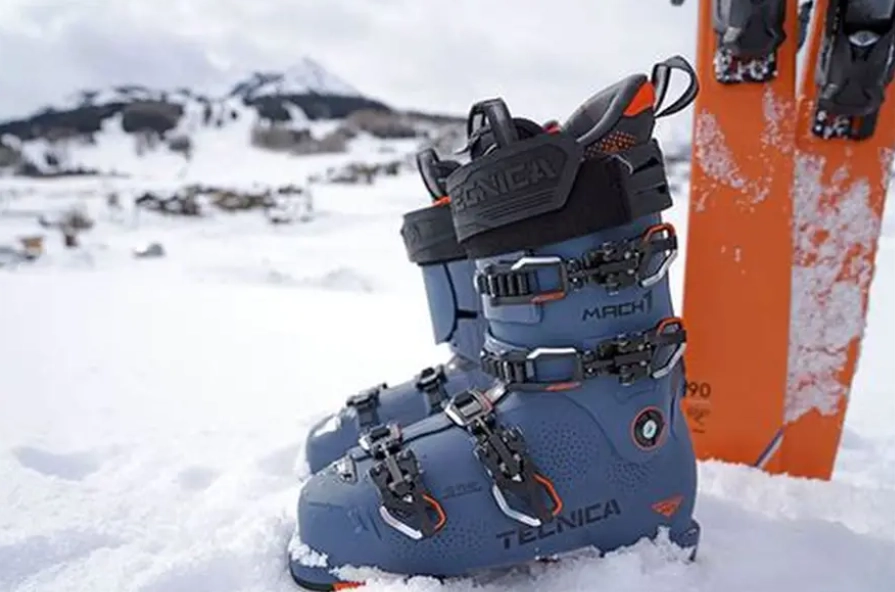
Versatile flex (often 95-110). Balanced forward lean. Good range of motion for hiking a bit. | Medium width last. Often has a "walk mode" for comfort off the slopes. Brands like Tecnica (Mach), Salomon (S/Pro), K2 excel here. |
| Freeride / Powder / Backcountry | Softer flex in the cuff for mobility, lighter weight. Significant range of motion for skinning. | Wider last for all-day comfort. Excellent, easy-to-use walk mode. Look at Atomic (Hawx Ultra XTD), Scarpa, or Dalbello. |
| Freestyle / Park | Softer, more forgiving flex to absorb landings. Often a more upright, neutral stance. | Comfort-focused liner. Twin-tip compatible sole. Full Tilt or K2 (BFC line) are classics in this category. |
Don't get sucked into a niche boot if you're not in that niche. That lightweight backcountry boot will feel vague and unsupportive if you spend 80% of your days on resort corduroy.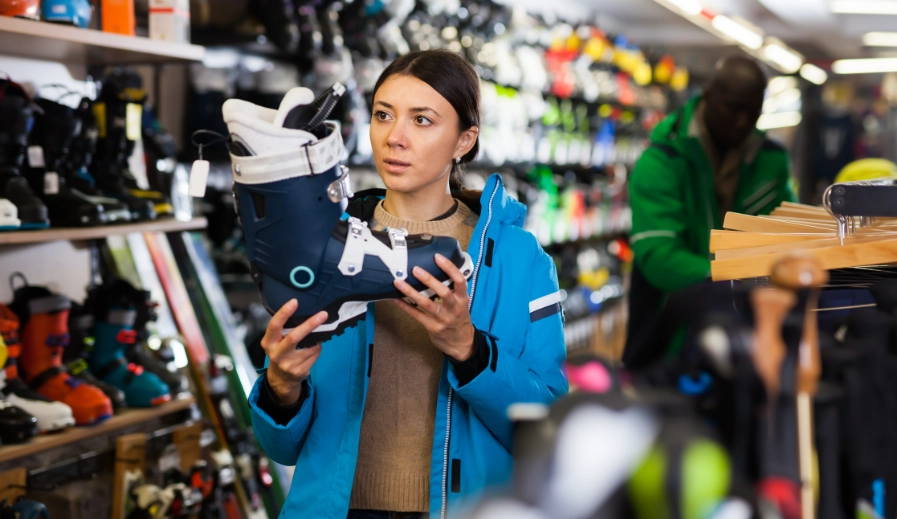
The In-Store Try-On: A Step-by-Step Test
You've done your homework. Now for the try-on. Go in the afternoon with your ski socks. Here's the process I walk through with every boot:
1. The Shell Fit Test: Take the liner out of the boot. Slide your bare foot into the empty plastic shell. Push your toes forward until they just touch the front. Now, have someone check the space behind your heel. If they can fit more than one finger (about 15-20mm) in that gap, the shell is too big. This is the single best objective test.
2. Liner On, Buckles Open: Put the liner back in, put your foot in, and do the buckles up only on the first or second notch. Stand up, flex forward into a skiing stance. Where do you feel pressure? Your toes should lightly brush the end, then pull back slightly as you flex. The top of your foot and instep should feel snug.
3. The 15-Minute Stand: This is critical. Buckle the boots snugly (not tourniquet-tight) and just stand in them for 15-20 minutes. Walk around the shop. This simulates the first chairlift ride up. Do you get a hot spot on your ankle bone? Does your little toe go numb? That's the pain you'll feel all day. Don't ignore it.
4. Talk to a Fitter, Not Just a Salesperson: A certified bootfitter (look for shops with PSIA or MasterFit accreditation) is worth their weight in gold. They can spot issues like a high instep or a narrow heel that you can't. Be honest about your ability and pain points. A good fitter might immediately say, "Your foot shape is classic for a Nordica Speedmachine, let's try that."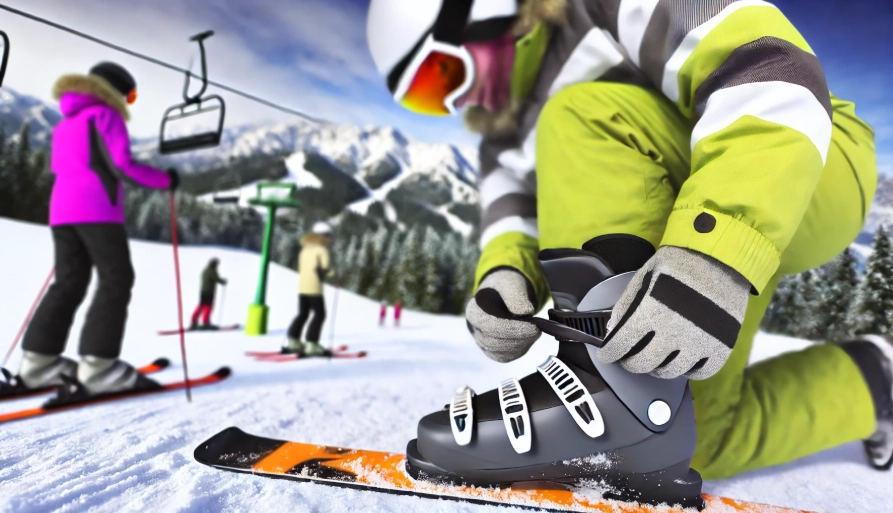
Mistakes Even Experienced Skiers Make
Let's call these out. I've been guilty of a few.
Buying for the liner, not the shell. That cozy, plush feeling is the liner. It will pack out. The unyielding plastic shell is what you're marrying. If the shell fit isn't right, no amount of aftermarket insoles or padding will fix it long-term.
Over-relying on heat molding. Heat molding liners (like Intuition or most branded "Custom" liners) are fantastic for refining fit and accommodating unique bumps. They are not magic beans that can turn a size 28 shell into a 27. They fine-tune; they don't resize.
Thinking more money equals better fit. The most expensive race boot on the wall is the worst possible choice if you have a wide, flat foot. A mid-range boot in the correct last and size will outperform a top-tier boot that's the wrong shape every time.
Ignoring the aftermarket. A custom footbed (not a generic Superfeet, but one molded to your arch) is the best $150 you can spend. It stabilizes your foot, fills dead space, and improves fit dramatically. A good fitter might also "punch" the shell (gently stretch a specific pressure point) or add a small pad for your ankle bone.
Your Boot Fitting Questions Answered
 How often should I replace my ski boots?
Reader Comments