I remember my first real winter camping trip in the Rockies. The forecast said -5°C (23°F), and I had a bag rated for "-7°C (20°F)". I thought I was golden. By 2 AM, I was wearing every piece of clothing I owned, shivering violently, and seriously contemplating starting a small fire inside my tent. That miserable night taught me more about cold weather sleeping bags than any product description ever could. The rating was a lie, or at least, I didn't understand the language.
Choosing a cold weather sleeping bag isn't about picking the one with the most aggressive marketing or the lowest temperature number. It's about understanding a hidden language of standards, materials, and physics. Get it wrong, and you're in for a long, cold night. Get it right, and you'll sleep like a baby in a snowdrift. This guide is what I wish I had before that trip.
What's Inside This Guide
The Truth About Temperature Ratings: EN/ISO 23537 Explained
This is the most critical part. Ignore the "Survival" rating. It's useless. You're not trying to not die; you're trying to sleep.
The only ratings that matter come from a standardized test called EN 13537 (now updated to ISO 23537). It gives you three numbers:
- Upper Limit: The temperature at which a standard male can sleep without excessive sweating. Not useful for cold weather.
- Comfort Rating: The temperature at which a standard female can sleep in a relaxed posture. This is your target number. If you're a cold sleeper (like most people), subtract 5-10°C from this for your personal comfort limit.
- Lower Limit: The temperature at which a standard male can sleep curled up for 8 hours without waking. This is the "survival" zone. You will be cold and miserable here.
My Rule of Thumb: Look at the bag's Comfort Rating. Then, think of the coldest temperature you expect to face. Your bag's Comfort Rating should be at least 5°C (9°F) lower than that expected low. Planning for -5°C (23°F) nights? Get a bag with a Comfort Rating of -10°C (14°F) or lower. This buffer accounts for humidity, wind, your metabolism, and the fact that ratings are done in lab conditions on a perfect sleeping pad.
If a bag doesn't have an EN/ISO rating, be very skeptical. It's like buying a car without a crash test rating.
The Great Insulation Showdown: Down vs. Synthetic
This is the eternal debate. There's no single "best" answer, only the best choice for your specific trip.
| Factor | Down Insulation (Goose/Duck) | Synthetic Insulation (Primaloft, Climashield, etc.) |
|---|---|---|
| Warmth-to-Weight | Winner. Nothing packs more warmth into less space and weight. High fill-power down (800+) is the gold standard for backpacking. | Heavier and bulkier for the same warmth level. You'll carry a larger pack. |
| Performance When Wet | Big Weakness. Down clumps and loses almost all insulating power when soaked. It also dries painfully slow. | Winner. Retains most of its warmth even when damp and dries much faster. Crucial for wet climates. |
| Durability & Care | Lasts decades if cared for properly. Requires special down wash, careful drying, and storage uncompressed. | Easier to care for, but loses loft (and warmth) faster over time with compression. More forgiving. |
| Price | Significantly more expensive, especially for high-fill-power, ethically sourced down. | Much more affordable. The best value for casual or budget winter campers. |
| Best For... | Dry, cold climates (interior mountains, desert winters). Ultralight backpackers. Those who prioritize pack size. | Coastal trips, humid environments, kayak camping, beginners, or anyone who expects condensation or precipitation. |
I own both. My high-loft down bag is for those crisp, dry alpine nights where every ounce counts. My synthetic bag comes out for anything near the coast, late fall trips where rain-snow mix is likely, or when I'm lending gear to a friend. It's the reliable workhorse.
Beyond the Fill: Hoods, Zippers, and Draft Tubes
The insulation is the engine, but these features are the chassis. They seal in the warmth.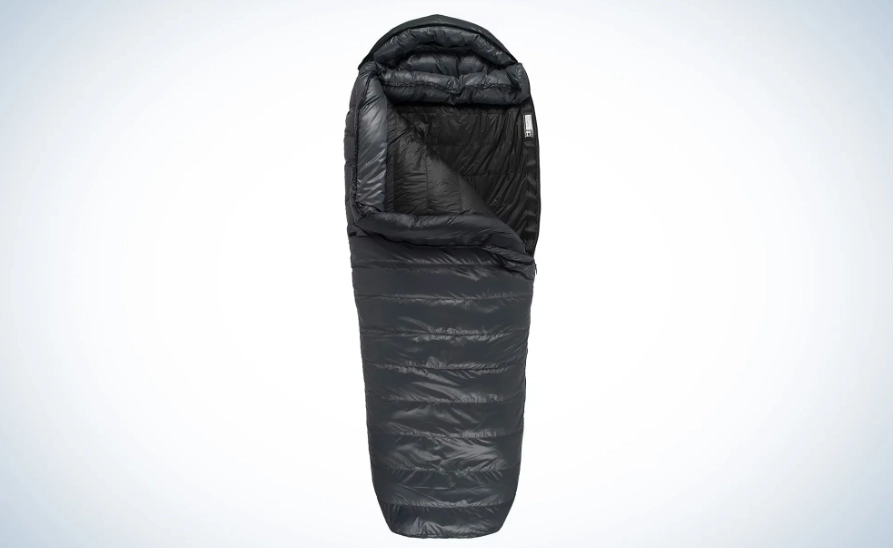
Hoods Are Non-Negotiable
You lose a huge amount of heat through your head. A well-fitting, insulated hood with a drawcord is mandatory for cold weather bags. Mummy bags do this best. Look for a hood that cinches down snugly around your face, leaving only a small breathing hole.
Draft Tubes and Baffles
Run your finger along the inside of the zipper. You should feel a thick, continuous tube of insulation sewn in behind it. This is the draft tube. A poor or discontinuous one is a major cold spot. Similarly, look for bags with "offset" or "box baffle" construction around the shoulders and feet. This prevents the insulation from shifting and creating thin spots.
Zipper Quality and Placement
A full-length, two-way YKK zipper is the standard for good reason. It lets you vent your feet without opening the top. Check that the zipper has a draft flap on the outside to cover it. Some bags now use water-resistant zippers, a nice touch for snowy conditions.
Expert Tricks to Stay Warm (That Most Guides Miss)
Your sleeping bag is part of a system. Here's how to make it work.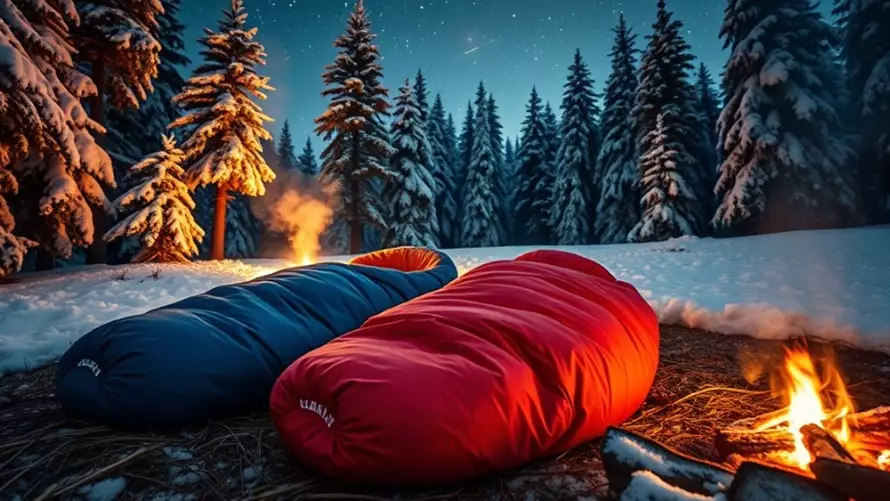
1. The Sleeping Pad is Half the Battle. Your bag's loft gets compressed underneath you, providing almost zero insulation there. Your pad provides that bottom insulation. For winter, you need a pad with a high R-value (a measure of thermal resistance). Look for an R-value of 4.0 or higher. Many winter campers use two pads: a closed-cell foam pad (R-value ~2) underneath an inflatable pad (R-value ~3-4).
2. Pre-Warm Your Core. Do 20 jumping jacks or some light exercise just before you get in the bag. Don't work up a sweat, just get the blood flowing. Getting into the bag already cold means your body has to work much harder to heat up that large air space.
3. Manage Moisture Meticulously. Your body exhales about a liter of water vapor per night. In a cold tent, that condenses. Never breathe directly into your bag. Wear a dry baselayer to bed—never the clothes you hiked in, which are damp with sweat. Consider a vapor barrier liner (VBL) for extreme cold; it's a controversial but highly effective tool to keep your bag's insulation dry from the inside.
4. The Midnight Snack. Your body is a furnace that needs fuel. Eating a small, high-fat snack (like a handful of nuts) right before bed gives your metabolism fuel to generate heat through the night.
5. The Bottle Trick. Fill a durable water bottle with hot (not boiling) water, wrap it in a sock, and put it in the foot of your bag 15 minutes before you get in. It's like a personal heater.
Who Makes Good Gear? A Look at Reliable Brands
You don't need to break the bank, but you get what you pay for. Here are a few brands consistently trusted by winter campers.
Western Mountaineering is the benchmark for premium down bags. Handmade in the USA, they use the best materials and conservative ratings. If it says -10°F, you'll be comfortable at -10°F. They're expensive, but they're heirloom-quality.
Feathered Friends is another top-tier US maker, often praised for their precise fit and attention to detail. Their bags are a favorite among mountaineers.
Marmot, The North Face, Mountain Hardwear offer excellent "high-end retail" options. They make very good EN-rated bags across a range of prices and temperatures. Their synthetic options, like the Marmot Trestles series, are particularly good values.
Big Agnes innovates with their sleeping bag/pad integration system, where the bag has a sleeve for your pad. This eliminates cold spots from rolling off the pad and can be incredibly warm, but it locks you into their system.
For Budget-Conscious Buyers: Look at Kelty or Teton Sports. They offer solid synthetic and down-blend bags with decent features for the price. Just be extra cautious about their temperature ratings and expect more weight and bulk.
Your Cold Weather Sleeping Bag Questions, Answered
 How do I wash my expensive down sleeping bag without ruining it?
Reader Comments